Key takeaways
- Sugar-free gum boosts saliva, which neutralises acid and helps protect enamel after eating.
- Sugar-free is essential. Gum with sugar feeds decay-causing bacteria and does the opposite.
- Xylitol gum may help a little with cavity prevention, but it is a bonus, not a treatment.
- Gum does not remove plaque and never replaces brushing. It is a between-meals helper.
It sounds too good to be true that chewing gum could help your teeth, and if it is the sugary kind, it is indeed too good to be true. But sugar-free gum earns its reputation for a genuine reason, as long as you understand exactly what it does and, just as importantly, what it cannot do.
The saliva effect
The real benefit of sugar-free gum is saliva. Chewing makes your mouth produce more of it, and saliva is your mouth's own defence system: it rinses away food particles, neutralises the acid that attacks enamel for a while after every meal, and carries minerals that help repair the earliest stages of damage. A short chew after eating, when you cannot get to a toothbrush, puts that defence to work. It is a modest but real help.
Sugar-free is the whole point
This cannot be overstated: the benefit applies only to sugar-free gum. Gum sweetened with sugar does the exact opposite. It bathes your teeth in sugar for the entire time you chew, feeding the bacteria that cause cavities. So the habit is only worth having if you check the label and choose sugar-free.
What about xylitol?
Many sugar-free gums are sweetened with xylitol, a natural sweetener that mouth bacteria cannot turn into acid. Some research suggests xylitol may reduce levels of decay-causing bacteria and lend a small hand in preventing cavities. If your gum contains it, treat that as a nice bonus. But the evidence is modest, and xylitol gum is a helper, not a shield. It does not stand in for a sensible diet, fluoride or brushing.
The hard limit: it is not brushing
Here is where expectations have to stay realistic. Gum stimulates saliva and clears some loose debris, but it does not remove plaque. The sticky bacterial film that causes decay and gum disease has to be physically brushed away, and no amount of chewing achieves that. Gum is a genuinely useful between-meals tool, especially when brushing is not an option, but it sits alongside brushing twice a day and cleaning between the teeth, never in place of them.
A note on your jaw
Moderation matters for one more reason. Chewing gum all day long can overwork the jaw muscles and joint, and can aggravate an existing jaw-joint problem in some people. If you have jaw pain or clicking, go easy. For everyone else, the sweet spot is a few minutes of sugar-free gum after meals, a small, helpful habit kept in proportion.
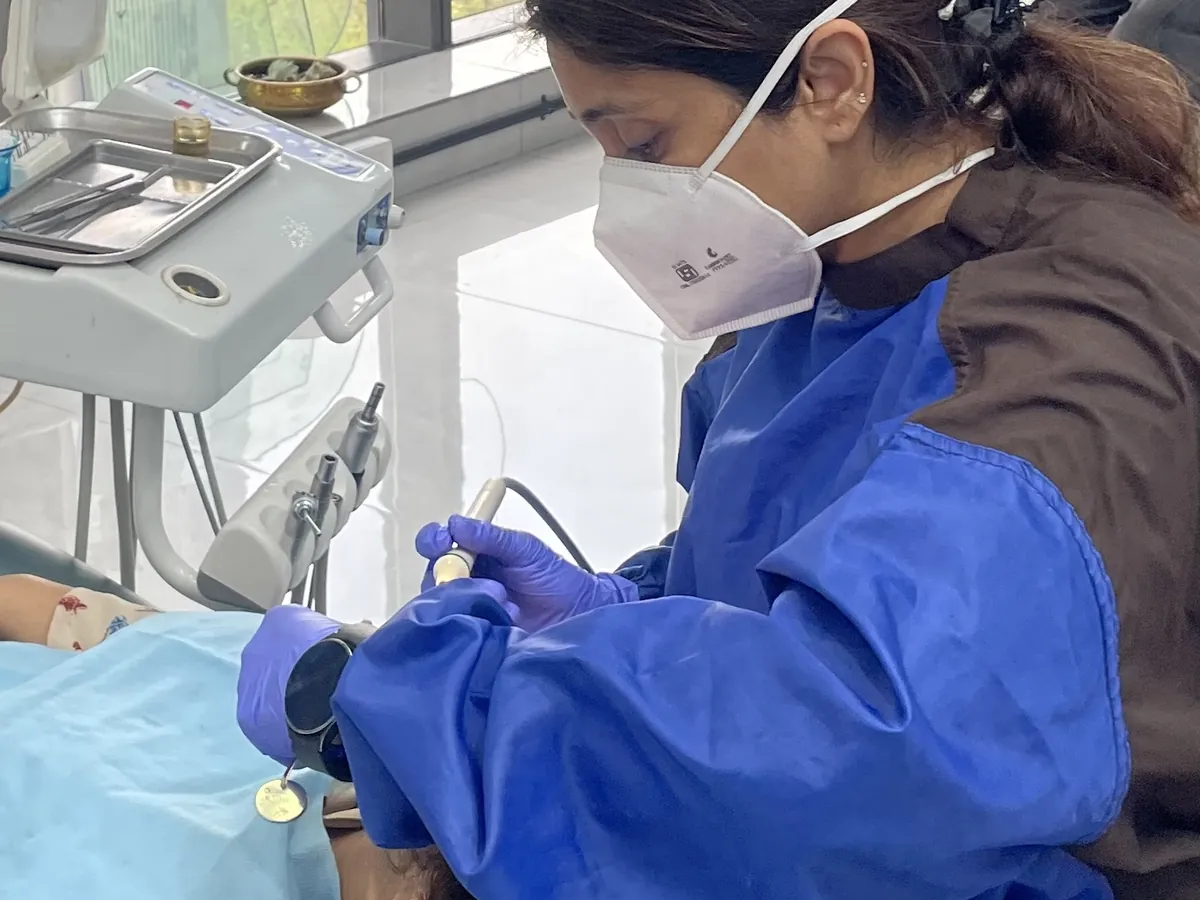
About images: Images labelled 'AI-generated image' are illustrations created with AI tools. They do not show Prudent Dental Clinic, our team or our patients. Real photos of the clinic are captioned as such.
Chewing gum and your teeth: your questions answered
- The best (and worst) foods for healthy teeth
- Dry mouth (xerostomia): causes and what helps
- Can a cavity heal on its own?
- How to get rid of bad breath, according to a dentist
- Dental examination
- Dyson oral care: does a high-tech toothbrush clean better?
- Is teeth whitening safe? Side effects explained
- Do you really need mouthwash? A dentist's honest take
- Water flosser vs dental floss: which is better?
Want habits that genuinely protect your teeth? Ask us. Call +91 70287 22200.
Call +91 70287 22200 · Open 7 days, 9 AM–9 PM (5 PM Sun)