
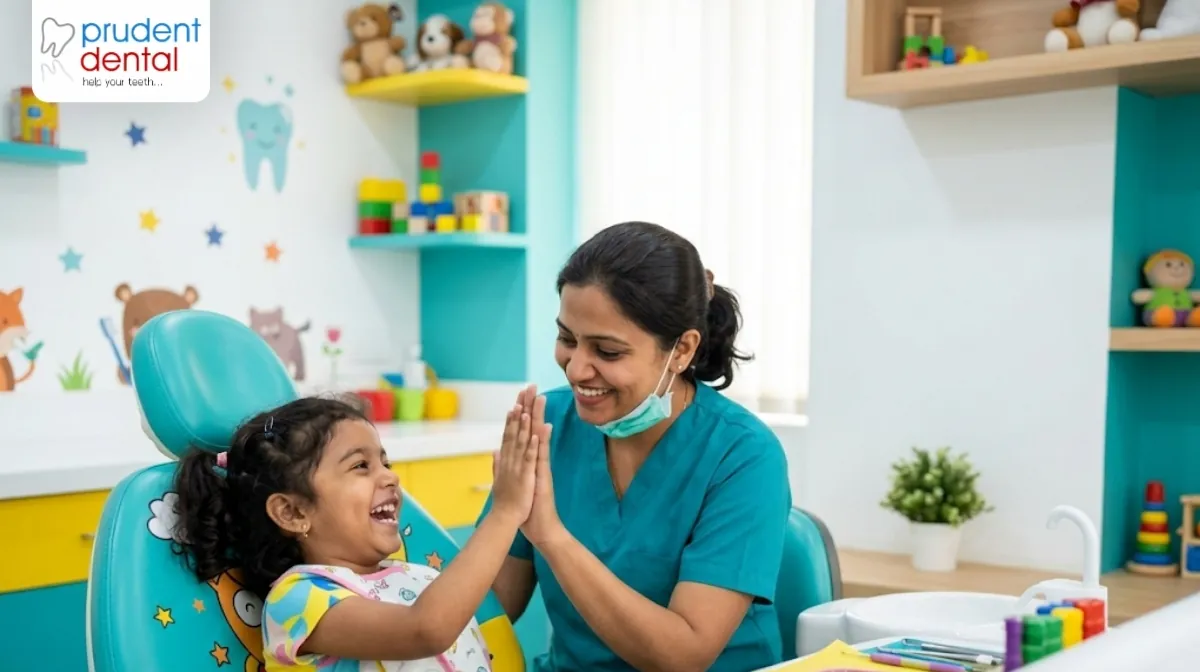
 AI-generated image
Key takeaways
- Start brushing at the first tooth (around six months), twice a day. It builds the habit early.
- Use fluoride toothpaste: a rice-grain smear under 3, a pea-sized amount from 3 to 6.
- Let the child hold their own brush while you do the real brushing with a second one.
- Lie the child back with their head in your lap so you can see and reach every tooth.
Brushing a toddler's teeth can feel like wrestling a small, slippery opponent twice a day. The good news: the goal is consistency and habit, not a perfect clean every time. A few practical techniques turn the nightly battle into something manageable, and set your child up for a lifetime of easy brushing.
Start early, before it is a fight
Begin brushing the moment the first tooth appears, around six months, and clean the gums with a damp cloth even before that. Starting this early is less about the one tooth and more about making brushing an unremarkable part of the daily routine, morning and night, long before your child is old enough to object. A toddler who has always had their teeth brushed resists far less than one for whom it is a new imposition. It connects naturally with your child's first dental visit.
How much toothpaste, and which
Use a fluoride toothpaste (fluoride is one of the best-proven protections for young teeth) but only a tiny amount. Under three years, a smear the size of a grain of rice; from three to six, a small pea. The small quantity matters because toddlers swallow toothpaste, so you want to teach them to spit it out, and not to rinse heavily afterwards, which washes the protective fluoride away. This is the same logic behind protecting against cavities in kids.
The two-brush trick and other tactics
The classic struggle is a toddler who wants control. Give it to them, partly. Let them hold and chew their own brush while you do the real cleaning with a second brush. Brush your own teeth alongside them so they copy you. Turn it into a song or a game, count the teeth aloud, let a favourite toy "have its teeth brushed" first. Keep the mood light; a calm, consistent routine achieves far more over months than forcing a perfect scrub on any single night.
Position is everything
The single biggest practical improvement is being able to see what you are doing. Lie your child back with their head resting in your lap and their body supported, so their mouth tilts up towards you. Suddenly you can see and reach every surface. With a partner, the knee-to-knee position (two adults facing each other, the child lying across both laps) works wonderfully for a wriggly toddler at the night-time brush. You cannot clean what you cannot see, and these positions solve exactly that.
Get them used to the dentist too
Brushing at home and early dental visits work together. Taking your toddler to the dentist by their first birthday, for short and friendly visits, builds the same comfort that makes brushing easier, and lets the dentist catch anything early and fine-tune your technique. For families in east Pune, our kids dentist in Viman Nagar keeps first visits gentle and unhurried. And when teeth are coming through, our teething guide may help on the rough nights.
About images: Images labelled 'AI-generated image' are illustrations created with AI tools. They do not show Prudent Dental Clinic, our team or our patients. Real photos of the clinic are captioned as such.
Brushing a toddler's teeth: your questions answered
- Cavities in kids: prevention and treatment
- When should your child first visit the dentist?
- Baby bottle tooth decay: causes and prevention
- Teething: symptoms and how to soothe your baby
- Kids dentist in viman nagar
- Menopause and your teeth: what changes and why
- Hormones and gum health: puberty, periods, pregnancy
- Osteoporosis, bone medication and your teeth
- Vitamin C and your gums: what it really does
Want a gentle first dental visit for your toddler? Call +91 70287 22200.
Call +91 70287 22200 · Open 7 days, 9 AM–9 PM (5 PM Sun)