Key takeaways
- Gutka and chewing tobacco are leading, preventable causes of oral cancer in India.
- Areca nut (supari), the base of paan even without tobacco, is itself classified as a carcinogen.
- Oral submucous fibrosis progressively stiffens the mouth and is pre-cancerous; it does not fully reverse.
- A non-healing patch, ulcer, lump, or reduced mouth opening is a reason to be examined without delay.
This is a blog post we would rather not need to write, but the numbers make it necessary. Paan, gutka and chewing tobacco are woven into daily life for millions in India, and they are also among the biggest preventable causes of serious mouth disease we see. Here, habit and risk are deeply intertwined.
Why gutka is so dangerous
Gutka combines areca nut with tobacco, and it is held in the cheek for long periods, bathing the lining of the mouth in carcinogens for hours. This is why smokeless tobacco is classified by the World Health Organization and Indian health authorities as a major cause of oral cancer. Unlike many health risks that are statistical and distant, the link here is strong, direct and seen in dental clinics across the country every day.
Oral submucous fibrosis
One of the most distinctive harms is oral submucous fibrosis (OSMF), closely tied to areca nut use. The soft lining of the mouth slowly turns fibrous and stiff. People notice burning when they eat spicy food, then that their mouth no longer opens as wide as it used to. It is progressive, it is considered pre-cancerous, and it does not fully reverse, which is exactly why stopping early, before much damage is done, matters so much.
"But mine has no tobacco"
It is a common belief that tobacco-free paan is safe. It is not. Areca nut (supari), the core of paan even without added tobacco, is itself classified as a carcinogen by the WHO. The slaked lime (chuna) used in paan further irritates and can damage the mouth lining. Tobacco-free paan is less harmful than gutka, but "less harmful" and "safe" are very different words.
The warning signs to act on
See a dentist promptly if you notice any of these: a white or red patch that does not go away; a mouth ulcer that has not healed in two to three weeks; a lump or persistently rough area; burning with spicy food; your mouth opening less than it used to; numbness; or unexplained bleeding. A change in taste can also be relevant. None of these means cancer by itself, but all of them mean "get checked now, not later."
Quitting, and how a dentist helps
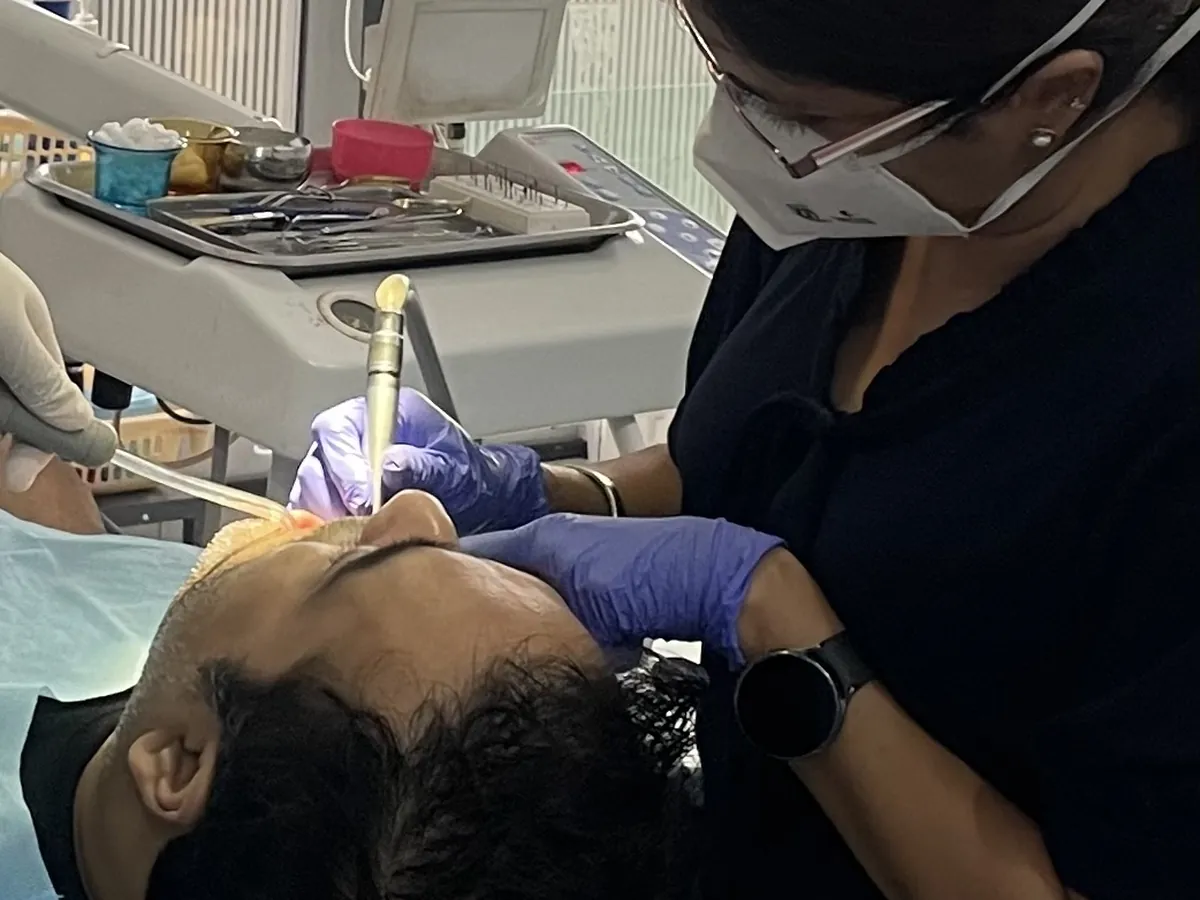
The single most powerful thing you can do for your mouth is to stop. The tissues begin to recover once the habit ends, and the cancer risk falls over time. A dentist can examine your mouth for early damage, screen for pre-cancerous change, often catching problems while they are still completely treatable, and support you through stopping. If you use gutka, paan or chewing tobacco, a screening examination is one of the most worthwhile appointments you will ever make.
About images: Images labelled 'AI-generated image' are illustrations created with AI tools. They do not show Prudent Dental Clinic, our team or our patients. Real photos of the clinic are captioned as such.
Paan, gutka and oral health: your questions answered
- Oral cancer: early signs you should never ignore
- What smoking does to your teeth and gums
- What vaping does to your teeth and gums
- General dentistry
- Metallic taste in your mouth: dental causes explained
- Protecting your teeth during festival sweet season
- How mouth breathing affects teeth and face shape
- Tongue-tie in babies: signs and when to treat it
- Can a dental device help your snoring?
Use gutka or paan? A screening could catch a problem early. Call +91 70287 22200.
Call +91 70287 22200 · Open 7 days, 9 AM–9 PM (5 PM Sun)