Key takeaways
- Pain specifically on chewing, rather than constant pain, usually means something is flexing or moving under pressure: a crack, a loose filling or crown, or inflamed tissue at the root.
- A cracked tooth classically causes a sharp pain on biting down that eases immediately once pressure is released; it can be invisible on X-ray and need a bite test to confirm.
- A loose, high, or separating filling can cause the same bite-triggered pain and is usually a quick fix.
- Pain on chewing can also mean a root infection; if it starts happening even without chewing, or swelling appears, it has likely progressed and needs prompt attention.
Tooth pain that appears only when you bite down, and eases the moment you stop, is a distinctive pattern that usually narrows the cause down quickly for a dentist. It is worth getting checked rather than avoiding the side and hoping it settles, since the common causes do not resolve on their own.
Quick answer: Pain triggered specifically by chewing usually means a cracked tooth, a loose or high filling or crown, or inflammation at the root reacting to pressure. A bite test and examination, sometimes with an X-ray, usually identifies which.
A cracked tooth
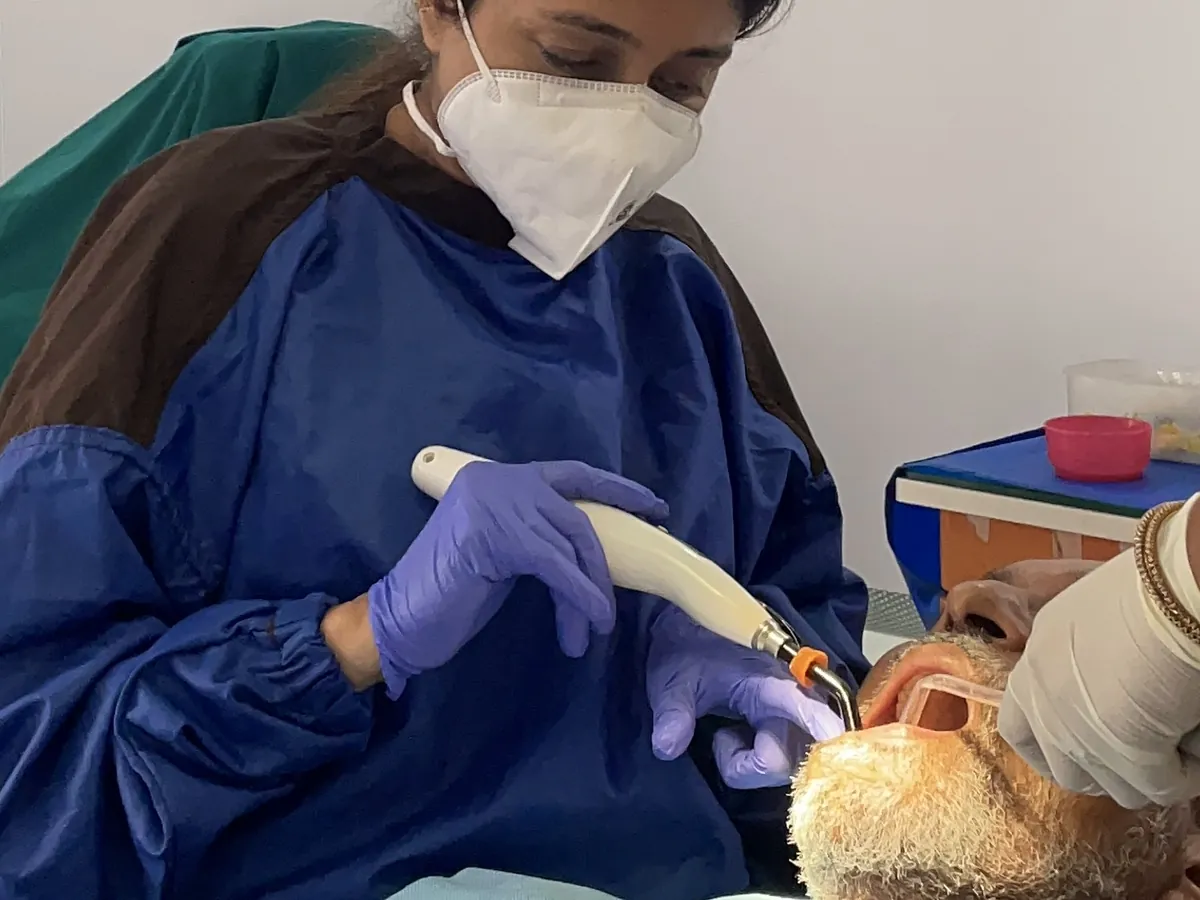
Cracks that are too fine to see with the naked eye can still cause real pain, because the crack flexes very slightly open under the pressure of biting, irritating the nerve, then closes again as pressure releases, which is why the pain is so specifically linked to chewing rather than constant. A dentist can often reproduce this exact pain with a bite test, biting on a small stick positioned over different parts of the tooth to find the cracked cusp. Our guide to cracked tooth: what to do covers treatment options once a crack is confirmed.
A loose, high, or failing filling
A filling that has loosened at the edges, started to separate from the tooth, or sits very slightly too high can flex or take uneven pressure during chewing, causing pain that a sound filling would not. Sometimes the issue is simply that the filling makes contact a fraction before the surrounding teeth do, concentrating force on that one spot. Both problems are usually straightforward to fix once identified; see our guide to how long a filling lasts for the signs a filling needs attention.
Root infection or inflammation
When the tissue around a tooth's root becomes inflamed, whether from an infected nerve or irritation from a recent deep filling, chewing pressure pushes the tooth very slightly into that sensitive area, producing pain on biting specifically. If this progresses, pain can start appearing even without chewing, and swelling may develop, both signs the infection has advanced and needs prompt treatment. Our guide to signs you might need a root canal covers the fuller symptom picture.
What to do in the meantime
Avoid chewing on the affected side, stick to softer foods, and book an examination rather than waiting. None of the common causes resolve by themselves, and a crack or infection left untreated tends to worsen rather than settle. If pain is severe, there is visible swelling, or you have a fever, treat it as a dental emergency and call straight away.
Sources & further reading
American Dental Association (MouthHealthy) · NHS, Dental Health · NIDCR, US National Institute of Dental & Craniofacial Research · Indian Dental Association
About images: Images labelled 'AI-generated image' are illustrations created with AI tools. They do not show Prudent Dental Clinic, our team or our patients. Real photos of the clinic are captioned as such.
Tooth pain when chewing: your questions answered
- Cracked tooth: pain on biting, and what to do
- Signs you might need a root canal
- How long does a dental filling last?
- Dental abscess: when swelling becomes serious
- Can you get a cavity between your teeth? Signs to watch
- Failed root canal: signs, causes and re-treatment
- Dental fluorosis: what those white or brown marks mean
- Acid erosion: how food and drink wear down enamel
- Oral thrush: causes, signs and treatment
Pain when you bite down? Let's find out why before it worsens. Call +91 70287 22200.
Call +91 70287 22200 · Open 7 days, 9 AM–9 PM (5 PM Sun)