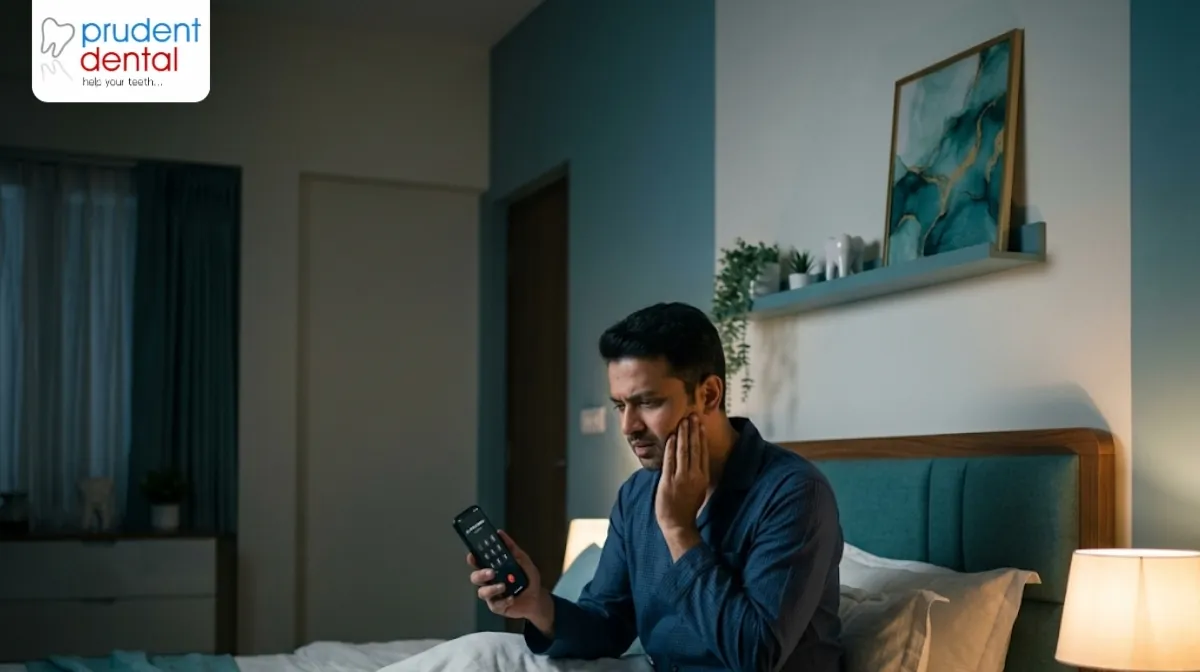
 AI-generated image
Key takeaways
- Impacted wisdom teeth can cause referred pain that presents as a one-sided headache, earache, or jaw pain, following the branches of the trigeminal nerve.
- Partially erupted wisdom teeth are prone to pericoronitis (infection of the overlying gum), which causes significant jaw pain and swelling.
- Wisdom tooth pain is often mistaken for earache because the pain radiates into the same area.
- An X-ray during a dental check-up quickly shows whether wisdom teeth are impacted and whether they are the likely source of your symptoms.
If you have a persistent one-sided headache, jaw ache, or unexplained earache, and your GP cannot find a cause, there is a good chance your wisdom teeth are worth looking at. Impacted wisdom teeth are a recognised source of referred pain that many people do not connect to their mouth because the discomfort is felt elsewhere. Here is how it works and what to do about it.
Quick answer: Yes, wisdom teeth can cause headaches and earache through referred pain along the trigeminal nerve. They are also a common source of jaw pain, especially when partially erupted and infected. A dental X-ray is the quickest way to confirm whether your wisdom teeth are the cause.
How wisdom teeth cause referred pain
The wisdom teeth (third molars) are supplied by branches of the trigeminal nerve, the main sensory nerve of the face. When a wisdom tooth is under pressure, infected, or actively pushing against adjacent teeth and bone, it triggers nerve signals that can be felt anywhere along the trigeminal distribution: in the jaw, temple, ear, or even behind the eye on the same side. This referred pain pattern is the same reason a dental abscess can feel like a sinus headache, or an ear problem can feel like toothache. The pain source and where it is felt are not always the same place.
Pericoronitis: the most common wisdom tooth problem
When a wisdom tooth partially erupts, a flap of gum tissue often covers part of it. Food and bacteria collect under this flap, and infection (pericoronitis) follows. This causes acute jaw pain, swelling that can make it hard to open the mouth fully, a bad taste, and often pain radiating to the ear, throat and temple. Episodes of pericoronitis can recur repeatedly if the tooth is not removed. Our guide to wisdom tooth pain relief covers how to manage it while awaiting treatment.
Pressure on adjacent teeth
Even without infection, an impacted wisdom tooth pushing against the tooth in front of it creates sustained pressure. Over months and years this can damage the root of the second molar and cause a persistent, dull aching. This is different in character to pericoronitis but can also radiate into the jaw and head.
What is the next step?
If you have any of these symptoms and have not had your wisdom teeth X-rayed recently, a dental assessment is the obvious starting point. A small X-ray shows the position, angulation and root development of all four wisdom teeth within minutes, and tells the dentist immediately whether they are impacted and whether they are the likely cause of your symptoms. Our post on whether wisdom teeth always need removing covers when removal is the right decision and when it is not.
Sources & further reading
American Dental Association (MouthHealthy) · NHS, Dental Health · NIDCR, US National Institute of Dental & Craniofacial Research · Indian Dental Association
About images: Images labelled 'AI-generated image' are illustrations created with AI tools. They do not show Prudent Dental Clinic, our team or our patients. Real photos of the clinic are captioned as such.
Can wisdom teeth cause headaches: your questions answered
- Wisdom tooth pain: what helps and when to remove
- Do wisdom teeth always need to be removed?
- Jaw pain and TMD: causes, signs and what helps
- Wisdom tooth removal cost in Pune: what decides it
- Metallic taste in your mouth: dental causes explained
- Gum boil (parulis): what it is and why it needs treatment
- Tooth pain when chewing: what it usually means
- Can you get a cavity between your teeth? Signs to watch
- Failed root canal: signs, causes and re-treatment
Jaw pain, earache or one-sided headache? Have your wisdom teeth checked. Call +91 70287 22200.
Call +91 70287 22200 · Open 7 days, 9 AM–9 PM (5 PM Sun)