Key takeaways
- Mouth taping means putting a strip of tape over your lips at bedtime to force breathing through your nose. It is a viral sleep trend, not a proven treatment.
- The tape does not harm teeth directly, but the mouth breathing it targets does matter: a dry mouth raises the risk of cavities, gum problems and bad breath.
- It can be genuinely unsafe for anyone with a blocked nose or undiagnosed sleep apnoea, and it should never be used on children.
- The safe fix is to find out why you breathe through your mouth, with a doctor or dentist, rather than sealing the symptom shut.
Mouth taping has taken over sleep videos: a small strip across the lips, worn overnight, promised to stop snoring, freshen your breath and give you deeper sleep. The idea has a sensible kernel, nose breathing is good for you, wrapped in a risky shortcut. Here is what mouth taping really does, where the dental risk actually sits, and the safer way to deal with mouth breathing.
Quick answer: Mouth taping forces nose breathing by holding your lips together while you sleep. The evidence that it helps is weak, and for some people, those with a blocked nose or possible sleep apnoea, it is unsafe. The dental point is real, though: chronic mouth breathing dries the mouth and that raises the risk of decay and gum disease. The answer is to treat the cause with a professional, not to tape the symptom shut.
What is mouth taping?
Mouth taping is exactly what it sounds like: you place a piece of tape, usually a gentle, porous strip sold for the purpose, over your closed lips before sleep so that you are nudged into breathing through your nose all night. Supporters claim it reduces snoring, stops you waking with a parched, sticky mouth, improves sleep quality and even sharpens the jawline. The underlying belief, that nose breathing is healthier than mouth breathing, is sound. It is the method that deserves a closer look.
Does it actually work?
Honestly, the evidence is thin. A handful of small studies in people with mild snoring or habitual mouth-breathing have found that encouraging nasal breathing can modestly reduce snoring, but these are limited, short-term and not a green light for everyone to tape up. Sleep-medicine organisations have not endorsed the practice, and crucially, taping does nothing about why you breathe through your mouth in the first place. If the cause is a blocked nose or a sleep disorder, a strip of tape just hides it.
Why mouth breathing matters for your teeth
This is where dentistry has a genuine stake. Breathing through your mouth for hours every night dries it out, and saliva is your mouth's natural defence: it washes away food, neutralises acid and keeps bacteria in check. A persistently dry mouth tips the balance towards tooth decay, gum inflammation and that thick, unpleasant morning bad breath. In children, long-term mouth breathing is also linked to how the jaws and teeth develop, which is a recognised, professionally assessed issue rather than a cosmetic one. So the problem mouth taping is chasing is real, your teeth do prefer nose breathing, it is the DIY fix that needs caution.
The risks nobody mentions
The danger is in who tries it. If your nose is blocked by a cold, allergies or a deviated septum, taping your mouth shut leaves you struggling for air. More seriously, loud snoring, gasping in your sleep and daytime exhaustion can be signs of obstructive sleep apnoea, a condition that needs proper diagnosis and treatment. Taping over it can make breathing harder and delay you getting help. There are also simpler downsides: skin irritation, disturbed sleep and anxiety at the sensation. Mouth taping should never be used on children, and no one should self-treat suspected sleep apnoea with tape.
A safer way to stop mouth breathing
Treat the cause, not the symptom. If your nose is regularly blocked, or you snore heavily, a GP or ENT assessment can find out why, congestion, allergies, septum or airway, and deal with it properly. On the dental side, if you have noticed a dry mouth, bleeding gums or lingering bad breath, those are worth a check so small problems do not quietly become big ones. Our guide to oral health and overall health explains how closely the mouth and the rest of the body are linked, and if your interest in mouth taping is really about your jawline, our honest take on whether mewing works is worth a read too. At our clinic in Viman Nagar, Pune, a routine check-up is the sensible first step.
Sources & further reading
American Dental Association (MouthHealthy) · NHS, Dental Health · Cochrane Oral Health (evidence reviews) · Indian Dental Association
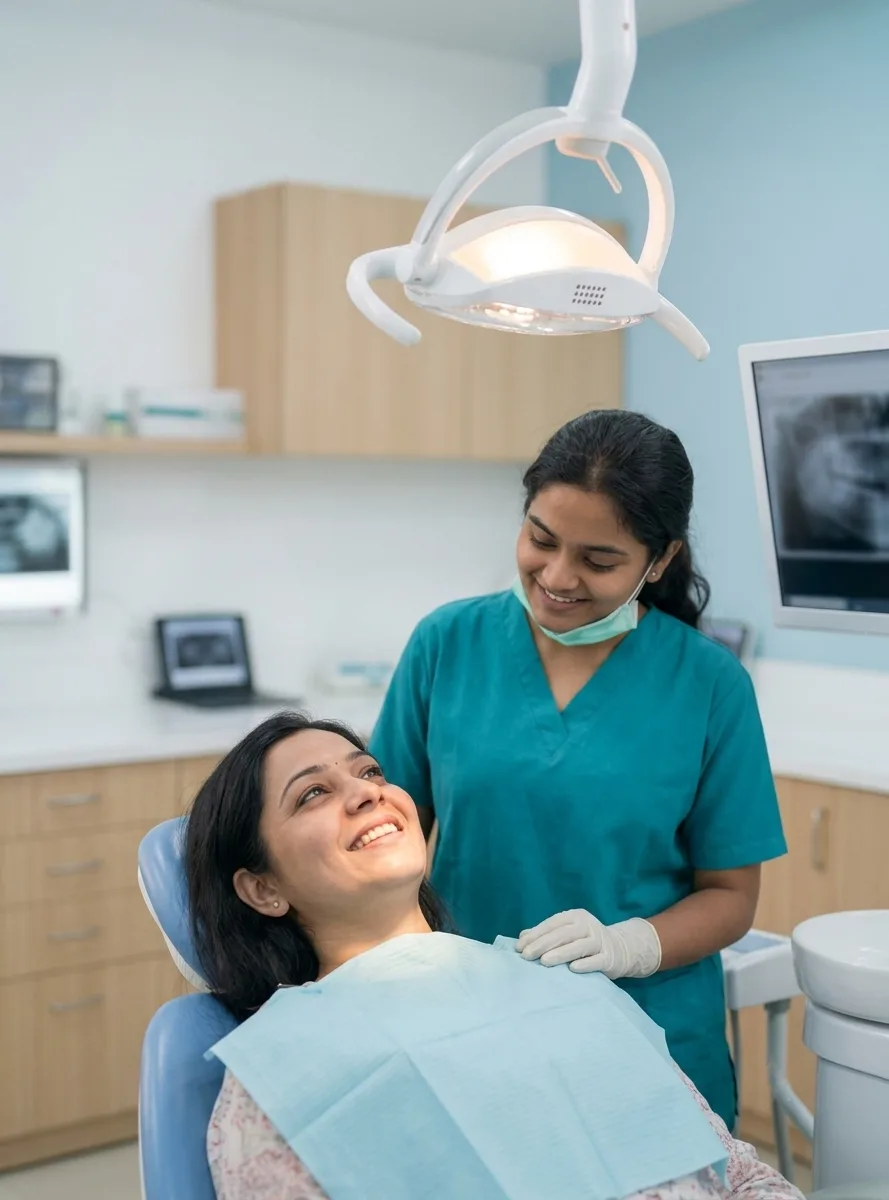
About images: Images labelled 'AI-generated image' are illustrations created with AI tools. They do not show Prudent Dental Clinic, our team or our patients. Real photos of the clinic are captioned as such.
Mouth taping: your questions answered
- Dry mouth (xerostomia): causes and what helps
- How to get rid of bad breath, according to a dentist
- Does mewing work? A dentist's honest take
- How your oral health affects your overall health
- General dentistry
- AI smile simulators: can you trust the preview?
- Can a cavity heal on its own?
- Dyson oral care: does a high-tech toothbrush clean better?
- Is teeth whitening safe? Side effects explained
Noticed a dry mouth, bleeding gums or bad breath? Get it checked properly. Call +91 70287 22200.
Call +91 70287 22200 · Open 7 days, 9 AM–9 PM (5 PM Sun)