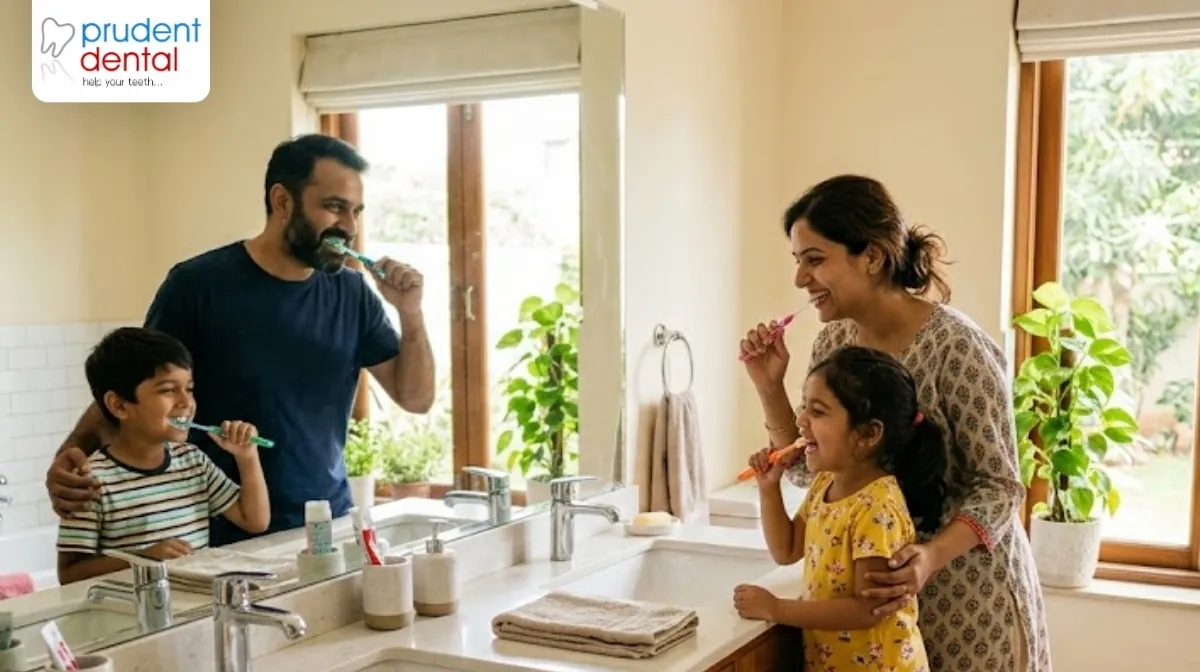
 AI-generated image
Key takeaways
- Oral probiotics introduce beneficial bacteria that compete with decay-causing and gum-disease-causing strains for space in your mouth.
- The best evidence so far is for bad breath and mild gum inflammation — results for cavities are promising but still early.
- The most studied strains for oral health are Lactobacillus reuteri, L. salivarius and Streptococcus salivarius K12.
- Probiotics are an add-on, not a replacement. Brushing, flossing and professional cleaning remain the foundation of good oral health.
Walk into any health store and you will find probiotic supplements promising to "balance your oral microbiome". Social media is full of dentists and biohackers swearing by L. reuteri lozenges. But do oral probiotics actually do anything for your teeth and gums — or is it wellness marketing dressed up in science? Here is an honest look at what the research shows and where it runs out.
Quick answer: Oral probiotics show real promise — particularly for bad breath and gum inflammation — but the evidence is still early and most trials are small. They appear to work as a useful supplement to good dental habits, not a shortcut around them. The strains with the most backing are L. reuteri, L. salivarius and S. salivarius K12.
What is the oral microbiome?
Your mouth is home to roughly 700 species of bacteria — some beneficial, some harmful, most neutral depending on conditions. When the balance tips — because of sugar, dry mouth, stress or a patchy oral-care routine — harmful species like Streptococcus mutans (linked to decay) and Porphyromonas gingivalis (linked to gum disease) can gain ground. The result, over time, is cavities, gum inflammation and bad breath.
Oral probiotics work on a straightforward principle: if you introduce large numbers of beneficial bacteria, they compete with harmful strains for space, nutrients and attachment sites on tooth and gum surfaces. Crowd out the bad actors and the damage they cause should reduce. In theory, it makes sense. The question is whether it holds up in practice.
What the research actually shows
Bad breath (halitosis)
This is probably the strongest area. Multiple trials have found that S. salivarius K12 — a strain naturally present in high concentrations in people who rarely have bad breath — produces compounds that inhibit the sulphur-producing bacteria responsible for the smell. A 2024 systematic review found statistically significant reductions in volatile sulphur compounds after four weeks of daily use. If bad breath is your main concern, the evidence here is reasonably solid.
Gum disease and inflammation
Several small trials using L. reuteri lozenges alongside professional scaling found lower scores for bleeding on probing (a standard measure of gum inflammation) compared to scaling alone. The probiotic seems to help reduce the regrowth of harmful bacteria after a clean, which buys more time before gum inflammation returns. The caveat: most trials run for four to twelve weeks and involve fewer than 100 participants. Longer, larger studies are still needed.
Tooth decay and cavity risk
A handful of trials — some in children, some in adults — have measured S. mutans levels (the main cavity-causing bacterium) after probiotic use and found modest reductions. However, "fewer harmful bacteria" does not automatically mean "fewer cavities": diet, fluoride, saliva quality and hygiene habits still dominate the equation. Treating probiotics as cavity prevention in place of fluoride and good brushing would be a mistake.
| Area | Evidence strength | Best-studied strain |
|---|---|---|
| Bad breath | Moderate — consistent findings across trials | S. salivarius K12 |
| Gum inflammation | Promising — works as an adjunct to cleaning | L. reuteri |
| Cavity risk reduction | Early — reduces harmful bacteria counts, but cavity data limited | L. salivarius, L. reuteri |
| Dry mouth relief | Weak — very limited trials | No clear winner yet |
What to look for if you buy one
- Format matters. Lozenges or chewable tablets that dissolve slowly keep the probiotic in your mouth longer than a capsule you swallow. More contact time means more chance of colonisation.
- Check the CFU count and strain name. A product should name the specific strain (e.g. L. reuteri DSM 17938), not just the genus. CFU counts of 1–2 billion are typical for oral products.
- Take it after brushing. Toothpaste and mouthwash can kill probiotic bacteria, so timing matters: use your lozenge after your oral-care routine, not before.
- Avoid mouthwash immediately after. Antibacterial mouthwash will wipe out the probiotic before it can establish. If you use mouthwash, use it at a different time of day.
- Store correctly. Most oral probiotics need refrigeration or at least a cool, dry place. Heat kills live bacteria.
What oral probiotics cannot do
It is worth being clear about the limits before the category gets oversold:
- They cannot remove tartar or calculus — that requires professional scaling.
- They cannot treat active gum disease, abscesses or cavities on their own.
- They do not replace fluoride as the primary evidence-based tool against tooth decay.
- They are unlikely to undo the effects of a poor diet or infrequent brushing.
The honest picture is that oral probiotics are a genuinely interesting area with early evidence behind them — but they work best in people who are already doing the basics well, as an upgrade, not a rescue.
Worth trying? An honest take
If bad breath is something you deal with regularly and you have already addressed the obvious causes (brushing, tongue cleaning, diet), a S. salivarius K12 lozenge is one of the more evidence-backed things you could add to your routine. The risk is low, the cost is reasonable and the mechanism makes sense.
For gum health, if you have a history of gingivitis or your dentist has mentioned inflamed gums, L. reuteri lozenges used alongside your regular professional clean may help keep things calmer between visits. Talk to your dentist before adding anything new, especially if you have active gum disease or are on medication.
The oral microbiome field is developing quickly. Expect more robust trials and better products over the next few years. For now, the fundamentals — brush well twice daily, clean between your teeth, and see a dentist regularly — are still doing most of the work.
Frequently asked questions
About images: Images labelled 'AI-generated image' are illustrations created with AI tools. They do not show Prudent Dental Clinic, our team or our patients. Real photos of the clinic are captioned as such.
Want to know what your mouth microbiome actually needs?
Call +91 70287 22200 · Open 7 days, 9 AM–9 PM (5 PM Sun)
- Does oil pulling really work? What the science says
- How to get rid of bad breath, according to a dentist
- Gum disease: from gingivitis to periodontitis
- Hydroxyapatite vs fluoride toothpaste: a dentist's view
- Scaling and polishing
- What screen time is doing to your jaw and teeth
- Can a cavity heal on its own?
- Dyson oral care: does a high-tech toothbrush clean better?
- Is teeth whitening safe? Side effects explained