
Key takeaways
- A warm salt water rinse soothes sore gums, ulcers and healing sockets, a genuine comfort measure.
- It does not cure gum disease, clear infection, whiten teeth or replace brushing.
- Half a teaspoon of salt in warm water, once or twice a day when needed, is enough.
- After an extraction, wait 24 hours before rinsing, then rinse gently to keep the area clean.
A warm salt water rinse is one of the few home remedies that genuinely earns its reputation, but, as with most things, only for what it actually does. It is a soother and a cleanser, not a cure, and knowing the difference saves people from letting real problems slide.
What salt water actually does
Warm salt water gently reduces swelling in inflamed tissue and helps keep an area clean while it heals. That makes it genuinely useful for sore gums, a mouth ulcer, mild irritation, or a healing extraction socket. It is cheap, safe when used sensibly, and available in every kitchen. For short-term comfort and keeping a sore spot clean, it works.
What it does not do
Salt water does not remove plaque, the sticky bacterial film that causes decay and gum disease has to be physically brushed off, and no rinse replaces that. It does not cure gum disease, clear a dental infection, or whiten teeth. If your gums are bleeding or swollen, salt water may calm the symptom for a day, but the underlying inflammation will keep going until the plaque and tartar are professionally removed.
How to use it properly
Dissolve roughly half a teaspoon of salt in a glass of warm, never hot, water. Swish gently for 20 to 30 seconds and spit it out; do not swallow it. Once or twice a day is enough when you have a reason to use it. More is not better: over-rinsing can dry out and irritate the soft tissues, and there is no gain from doing it constantly.
After a tooth extraction
This is where salt water is most valuable, and where timing matters most. For the first 24 hours after an extraction, do not rinse at all: disturbing the blood clot too early can cause a painful dry socket. From the next day, gentle warm salt water rinses after meals help keep the socket clean while it heals. Always follow the specific aftercare instructions your dentist gives you.
When rinsing is not enough
If you find yourself rinsing with salt water for weeks because your gums keep bleeding or feel sore, that is the signal to stop treating the symptom and find the cause. Bleeding gums almost always mean inflammation that needs a professional clean. Book a check-up, it is a far better use of your time than another month of rinsing.
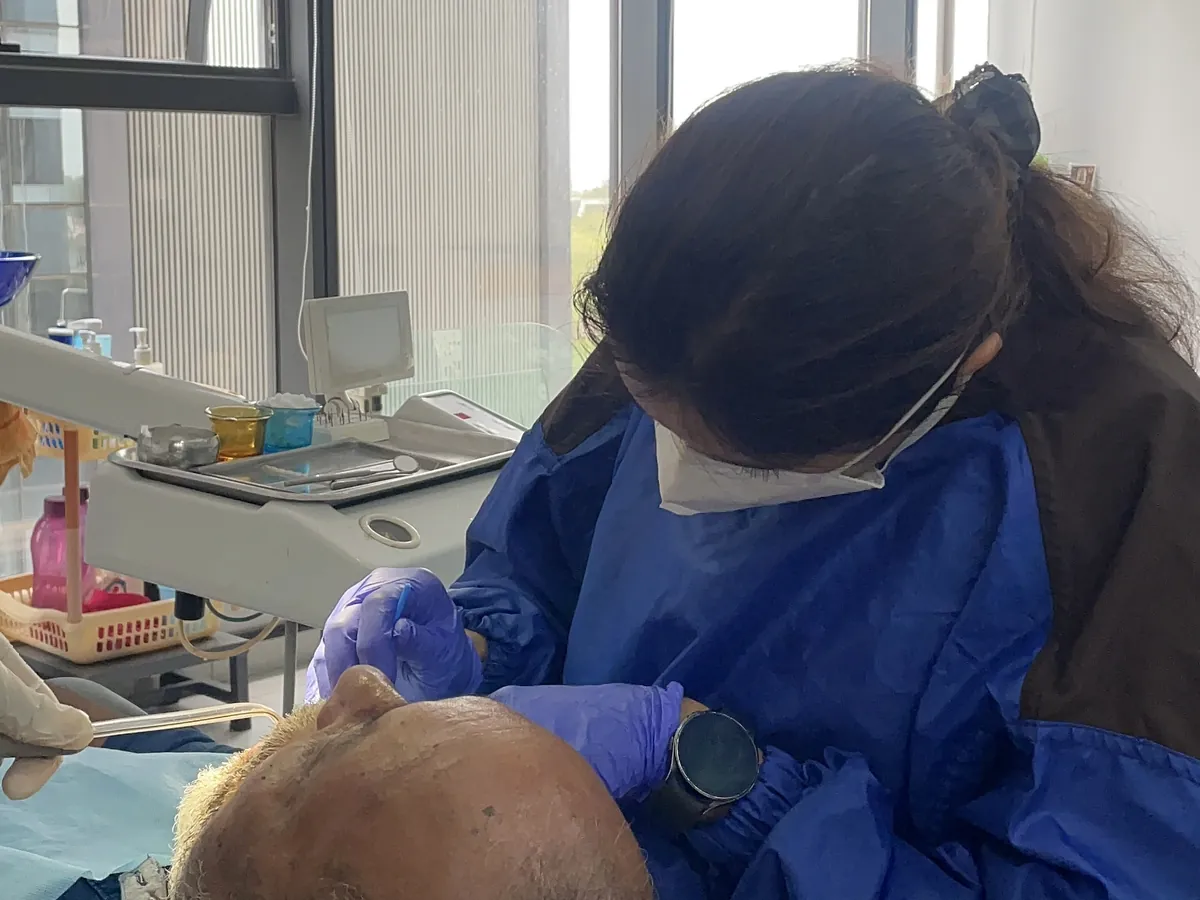
About images: Images labelled 'AI-generated image' are illustrations created with AI tools. They do not show Prudent Dental Clinic, our team or our patients. Real photos of the clinic are captioned as such.
Salt water rinses: your questions answered
- Swollen gums: causes and how to treat them
- Tooth extraction aftercare: a day-by-day guide
- Why do my gums bleed when I brush? Causes and fixes
- Periodontics
- Mouth ulcers: causes, relief and when to worry
- Does turmeric whiten teeth? What's true and what's not
- Is a neem datun good for your teeth?
- Is sugar-free gum actually good for your teeth?
- Can a cavity heal on its own?
Gums that keep bleeding need more than a rinse. Call +91 70287 22200.
Call +91 70287 22200 · Open 7 days, 9 AM–9 PM (5 PM Sun)