
Key takeaways
- There is no good evidence that turmeric whitens teeth — it is a trend, not a proven method.
- Turmeric is a strong dye and can temporarily stain fillings, crowns and porous surfaces.
- "Fresher-looking" teeth after use come from brushing, not from any whitening effect.
- Real whitening uses a controlled peroxide gel that changes the tooth’s internal shade; turmeric cannot.
Turmeric for teeth whitening is one of the most-shared home-remedy trends online, and it is worth addressing honestly: rubbing a bright yellow spice on your teeth to make them whiter is counter-intuitive, and the evidence does not back it up. That does not make turmeric worthless — it just does not do this.
Where the claim comes from
Turmeric (haldi) is genuinely remarkable — it has well-studied anti-inflammatory properties and a long place in Indian medicine and cooking. Somewhere along the way, that general reputation for being good for you turned into a specific claim about whitening teeth. The whitening claim, though, is anecdotal. There is no reliable clinical research showing turmeric lightens the shade of enamel.
Why people think it works
When someone brushes with a turmeric paste and feels their teeth look cleaner, something real did happen — but it was the brushing. Any paste scrubbed over teeth removes some surface film and food debris, leaving them looking fresher. Rinsing away bright yellow paste also creates a strong visual contrast that makes teeth seem whiter for a moment. None of that touches the actual colour of the tooth, which is set deeper in the enamel and dentine. For why teeth look yellow in the first place, see our guide on why teeth go yellow.
The practical downsides
Turmeric is a powerful dye — it stains clothes, countertops and grout, and it can temporarily discolour porous surfaces in the mouth, including the edges of fillings and crowns. In paste form it is also mildly abrasive, so scrubbing hard and often with it is not good for enamel over time. It is messy and inconvenient, and for all that effort it does not deliver the one thing it is being used for.
What actually whitens teeth
Professional whitening uses a controlled peroxide gel that penetrates the enamel and breaks down the stain molecules held inside the tooth, genuinely lightening the shade. It is a chemical process with predictable, measurable results, planned after a check-up so any decay or gum issue is dealt with first. That is a fundamentally different thing from a surface scrub. Compare the routes honestly in our post on home vs professional whitening.
The honest bottom line
Enjoy turmeric in your food, where it genuinely does you good. For whiter teeth, the reliable options are reducing staining habits, keeping up good brushing, and — if you want a real change — professional whitening matched to your teeth. If you are in Pune, see teeth whitening in Viman Nagar.
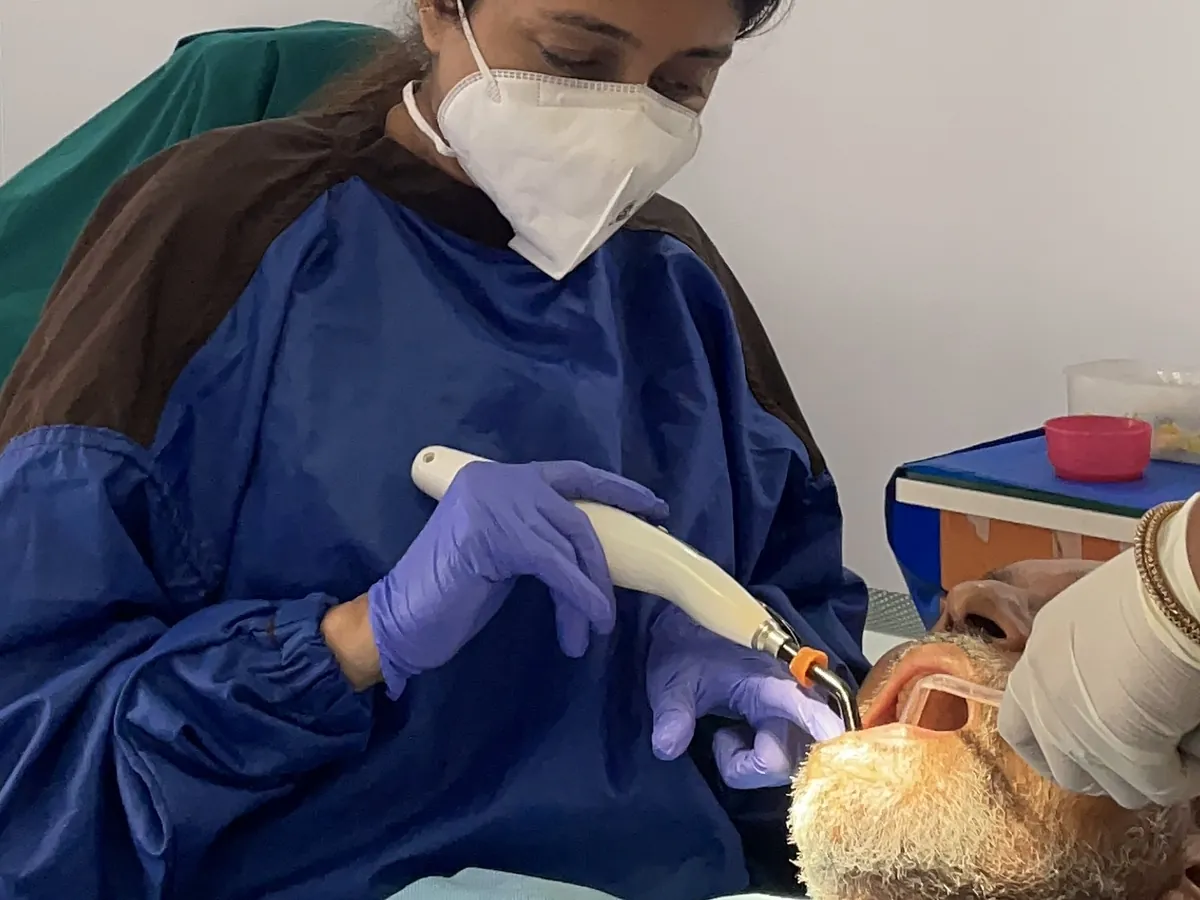
About images: Images labelled 'AI-generated image' are illustrations created with AI tools. They do not show Prudent Dental Clinic, our team or our patients. Real photos of the clinic are captioned as such.
Turmeric and teeth whitening: your questions answered
- Does baking soda whiten teeth? A dentist's take
- Why are my teeth turning yellow? Causes and fixes
- Is teeth whitening safe? Side effects explained
- Teeth whitening
- Teeth whitening in viman nagar
- Is a neem datun good for your teeth?
- Is sugar-free gum actually good for your teeth?
- Can a cavity heal on its own?
- Dyson oral care: does a high-tech toothbrush clean better?
Want teeth that are genuinely whiter? Ask us what will work. Call +91 70287 22200.
Call +91 70287 22200 · Open 7 days, 9 AM–9 PM (5 PM Sun)