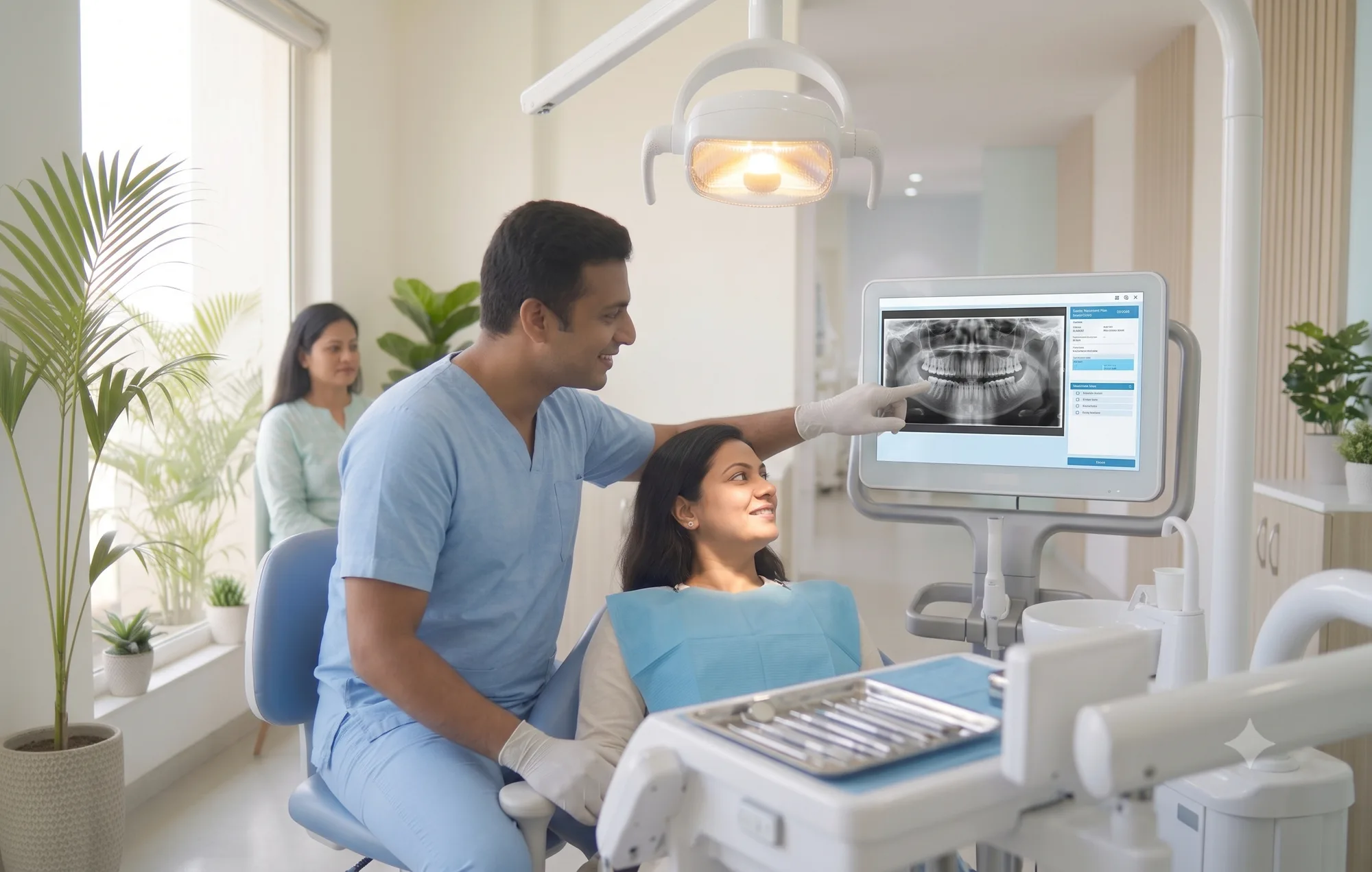
 AI-generated image
Key takeaways
- The main options are metal braces, ceramic (tooth-coloured) braces, self-ligating braces, lingual braces fitted behind the teeth, and clear aligners.
- They differ mainly in how visible they are, comfort, cleaning, cost and which tooth movements they handle best.
- No type is best for everyone: the complexity of your bite usually matters more than appearance in deciding what will work.
- Every type needs a retainer afterwards to stop the teeth drifting back.
Braces have changed a great deal. Today you can choose between metal and tooth-coloured brackets, brackets that need no elastic ties, braces hidden behind the teeth, and removable clear aligners. This guide compares the main types side by side, then points you to our detailed guide on each.
Quick answer: Metal braces are the most versatile and usually the least expensive. Ceramic braces work the same way but are far less noticeable. Self-ligating braces use a built-in clip instead of elastic ties. Lingual braces are fixed behind the teeth, so they cannot be seen. Clear aligners are removable plastic trays that suit many mild to moderate cases. Which suits you depends mostly on your bite.
All types at a glance
| Type | Visibility | Comfort | Cleaning | Relative cost | Often suits |
|---|---|---|---|---|---|
| Metal braces | Visible | Brackets can rub at first | Needs extra care around brackets | Usually the lowest | Almost all cases, including complex ones |
| Ceramic braces | Much less visible | Similar to metal | Clear ties can stain | Higher than metal | People who want fixed braces that blend in |
| Self-ligating braces | Metal or ceramic versions | Similar; no elastic ties | Slightly easier without ties | Often higher than conventional | People who value easier cleaning |
| Lingual braces | Hidden behind the teeth | Can affect the tongue and speech at first | Harder to clean | Usually the highest | People who need fixed braces to be invisible |
| Clear aligners | Nearly invisible | Usually comfortable; removable | Easiest: take them out to brush and eat | Varies with the case | Many mild to moderate cases, with good daily wear |
Metal braces
Stainless-steel brackets are bonded to the teeth and joined by a wire, with small elastic ties holding the wire in place. Metal braces are strong, reliable for complex tooth movements and usually the most affordable option. Modern brackets are smaller than many people remember.
Ceramic (tooth-coloured) braces
Ceramic braces work in exactly the same way as metal braces, but the brackets are tooth-coloured or clear, so they blend in. They usually cost more, and the clear ties can pick up stains from tea, coffee and curries. Our guide to ceramic vs metal braces compares the two in detail.
Self-ligating braces
Instead of elastic ties, these brackets have a small built-in clip or door that holds the wire, and they come in metal and ceramic versions. Their real advantages are easier cleaning and sometimes quicker adjustment visits; evidence reviews have not shown that they finish treatment faster overall. Read more in our guide to self-ligating braces.
Lingual braces
Lingual braces are fixed to the inside surfaces of the teeth, so they are hidden from view. They are custom-made, usually cost more, take longer to get used to, and can affect speech and the tongue at first. Not every clinic offers them, so ask whether they are available and suitable for your bite.
Clear aligners
Clear aligners are a series of removable plastic trays, each moving the teeth a small step. They are nearly invisible and you take them out to eat and brush, but they only work if they are worn for most of the day, usually around 20 to 22 hours. They suit many mild to moderate cases; complex bite problems may still need fixed braces. See our guides to braces vs clear aligners, whether clear aligners really work and Invisalign vs other aligner brands.
How to choose
Start with what your teeth need, not with a brand or a look. An examination with X-rays shows how complex your bite is, which narrows the realistic options. Then weigh appearance, comfort, how disciplined you will be with removable trays, and budget. How long treatment takes depends on the movement needed rather than the type of brace; our guide to how long braces take explains the usual range, and our guide to adult braces covers treatment later in life.
At Prudent Dental Clinic in Viman Nagar, orthodontic treatment includes traditional metal braces and clear aligners. Your examination shows which options suit your case, and you receive the plan and a written estimate before you decide. Our orthodontics page explains the process, and our clear aligners in Viman Nagar page covers aligner treatment in more detail.
Every type needs a retainer
Whatever type you choose, teeth tend to drift back once treatment ends, so a retainer is part of every orthodontic plan. Our guide to retainers after braces covers the types and how long to wear them.
Sources & further reading
American Dental Association (MouthHealthy) · Cochrane Oral Health (evidence reviews) · NHS, Dental Health · Indian Dental Association
About images: Images labelled 'AI-generated image' are illustrations created with AI tools. They do not show Prudent Dental Clinic, our team or our patients. Real photos of the clinic are captioned as such.
Types of braces: your questions answered
- Orthodontics
- Ceramic vs metal braces: which should you choose?
- Self-ligating braces: are they worth it?
- Braces vs clear aligners: which is right for you?
- Retainers after braces: types, care and how long
- What is an OPG X-ray? Panoramic dental X-ray explained
- Are dental X-rays safe?
- How to read your dental treatment plan and estimate
- Zirconia vs porcelain veneers: how to choose
Not sure which braces suit your teeth? Start with an examination. Call +91 70287 22200.
Call +91 70287 22200 · Open 7 days, 9 AM–9 PM (5 PM Sun)